


Laboratory Oven
Your Professional Laboratory Oven Supplier
Our goal is to be your reliable partner for laboratory oven in China. ElonTherm, a division of Hangzhou Lantian Instrument Co.,Ltd is a leading manufacturer specializing in high-temperature furnaces and environmental test chambers. We have a skilled engineering team dedicated to refining every stage, from product development and process improvement to production oversight, ensuring every product delivered meets rigorous quality and performance standards. The price is competitive and the product is quality-assured, which is a good choice for your long-term cooperation.




Product Categories


Why Choose Us
Our equipment: Our company boasts a comprehensive suite of advanced equipment, including CNC lathes, milling machines, CNC press brakes, engraving machines, shearing machines, punching machines, drilling machines, argon arc welding machines, and automatic spraying machines.
Quality control: Every product we produce undergoes rigorous quality control to ensure consistent quality and superior performance.
Customized solutions: We offer customized solutions, optimizing our equipment to meet specific customer needs and application environments.
Our services: Our team of experts will recommend the most suitable products according to customer needs and provide detailed consultation, we ensure timely delivery, and we provide long-term service support.
Versatility in applications
Laboratory ovens are used for a wide variety of tasks, including drying, sterilization, baking, heat treatment, and material testing.
Precision and temperature control
Lab ovens provide excellent temperature uniformity, ensuring consistent results across the entire chamber.
Efficient drying and dehydration
Laboratory ovens use convection heating to dehydrate samples without exposing them to direct radiant heat, which can damage delicate materials.
Customization for specific needs
High-temperature sintering ovens and other specialized models can be customized to meet specific laboratory or small-scale production requirements.
Cost-effectiveness
By offering tailored solutions and efficient performance, laboratory ovens help reduce operational costs in both laboratory and small-scale production environments.
Safety and reliability
Laboratory ovens are designed with safety features such as over-temperature protection, secure door locks, and ventilation systems to prevent hazardous conditions.
Specification of Laboratory Oven
|
Maximum temp, °C |
250 |
|
Continuous operating temp, °C |
250 |
|
Chamber Size |
300x_300x_275 |
|
External Size |
550x_640x_540 |
|
Power Voltage |
220V / 50Hz |
|
Power Phase |
1 |
|
Power Rating (kW) |
0.5 |
|
Chamber material |
SU 304 |
|
Heating Rate, |
5℃ / min |
|
Temperature Stability, ℃ |
0.5℃ |
|
Temperature Uniformity |
±1% |
|
Weight (kg) |
32KG |
|
Vacuum Limit |
<1torr(133Pa) |

Precise and reliable temperature control with a microcomputer controller. Observation chamber with tempered, bulletproof double-layer glass door. Adjustable door tightness with molded silicone rubber seal ensures high vacuum levels.
Durable stainless steel chamber construction. Suitable for storage, heating, testing, and drying in vacuum or atmospheric conditions. Vacuum environment lowers the boiling point of liquids, ideal for heat-sensitive substances.
Application of Laboratory Oven
Not unlike a forge used in metallurgy or a kiln to make glass hot, laboratory ovens heat and cool materials, such as steel or glass, to make them more pliable. This process improves a material’s toughness and ductility while, in the case of metals, enhancing magnetic properties and electrical conductivity.
Primarily a means of heating materials without dehumidifying them, baking is commonly used in the pharmaceutical industry. For example, pharmaceuticals can be sterilized without compromising the integrity of the product or removing the moisture contained within it.
In contrast to baking, drying removes moisture from the air, a common procedure in biological and clinical applications. Forced air and vacuum ovens extract humidity from the sample, relying on gravity convection to pull moisture from the air, as well.
Alternating between drying and baking, the curing process is designed to harden materials. As a result, new chemical compositions are created, such as glues, epoxies, rubber, plastics, and other polymer substances, often employed by nanotechnology and semiconductor industries.
Ovens’ most fundamental function is sterilization, particularly of instruments in the medical and clinical fields. Oven heat can purify glassware and metals, typically at 160 degrees Celsius or more. This process can take time. Items need to be ‘seared’ for 45 to 60 minutes and then cooled off for safe handling.
Main Structure of Laboratory Oven
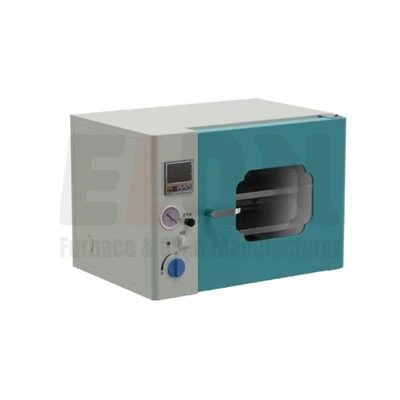
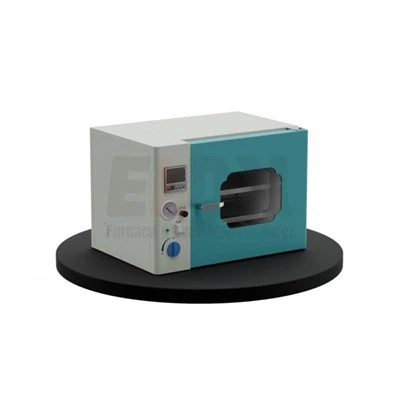
External shell material: The external shell is made of high-quality cold-rolled steel plate treated with phosphate film and high-temperature plastic spraying. It features a double-layer tempered, bulletproof glass door. The color scheme consists of a green door and a computer gray body.
Working chamber material: The working chamber is crafted from reinforced stainless steel, with two layers of stainless steel shelves and racks.
Internal structure: Designed with an efficient air duct system and micro-airflow circulation, the fan-forced circulation ensures comprehensive three-dimensional heating, providing excellent temperature uniformity within the chamber. The unique geometric cavity design allows for adjustable shelf height and number as per user requirements.
Insulation material: The high-density glass fiber cotton is filled in the interlayer of the front, back, left, right, top, and bottom of the chamber for effective thermal insulation.
Sealing material: The door and chamber are sealed with high-temperature resistant silicone rubber sealing strips to ensure airtightness.
Controller: Located on the left side of the chamber, equipped with a pressure gauge and vent valve. It has a built-in control system and compensating wire connected to the sensor.
Heating element: Stainless steel electric heater.
Packing and Shipping of Laboratory Oven
|
packing |
Wooden box/tray |
|
Shipping |
Shipped by road, sea, rail |
FAQ
We're professional laboratory oven manufacturers in China, specialized in providing high quality ODM service. We warmly welcome you to buy reliable laboratory oven for sale here from our factory. For price consultation, contact us.
Fan Convection Oven, Forced Air Laboratory Oven, 250 Vacuum Drying Oven