


Split Tube Furnaces
What is a split tube furnace
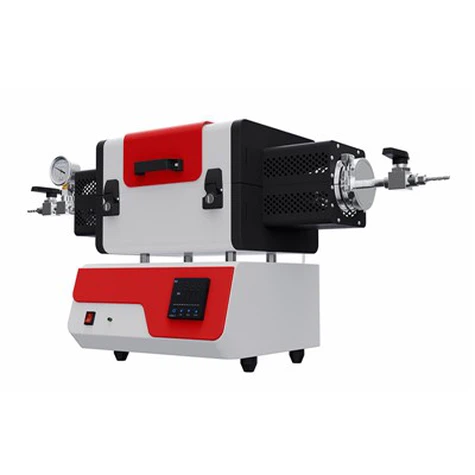
A split tube funace is a tube furnace that can be opened to allow for the easy installation and removal of work tubes and reaction vessels. Carbolite Gero's TS split tube furnace range is constructed in two halves, joined together with hinges, and fitted with pneumatic dampening struts for ease of opening.
Why Choose Us
01/
Rich experience
The company has 26 years of experience in the production of heat treatment equipment, and has strict requirements for the control of raw materials. Each equipment will undergo quality inspection before leaving the factory. Each product provides a one-year warranty and a half-year warranty for heating elements. We provide lifelong service to all customers.
Professional team
The company is located in Hangzhou (Binjiang) High-tech Development Zone, and has a product design and development department and a production department in Heping Kiln, Qiutao North Road. The company focuses on the practical performance of the products, and technical personnel account for more than 60%.
Customized services
Our company provides personalized customization services and customizes products according to your experimental requirements.
After-sales service
Quality assurance: Each device provides a one-year warranty service, and the heating element provides a six-month warranty service. If there is any problem during the warranty period, free repair or replacement service is provided.Technical support: Provide 24/7 multilingual technical support services. Customers can contact the technical team by phone, email or instant messaging tools to solve any problems encountered during use.


Product Categories


Benefit of Split tube furnaces
The ability to easily insert and remove samples or materials is a key advantage of split tube furnaces. Other benefits of these furnaces include:
Temperature control
Split tube furnaces typically have precise temperature control, allowing for consistent and accurate heating of materials.
Versatility
Split tube furnaces can be used for a wide range of applications, including the synthesis of inorganic compounds, the sintering of ceramics, and the annealing of metals.
Efficiency
Split tube furnaces can be more efficient than other heating methods, as they can heat materials more evenly and quickly.
Safety
These furnaces often have built-in safety features, such as over-temperature protection and alarms, to help ensure the safe operation of the furnace.
Types of Tube Furnaces
Tube furnaces come in a variety of forms, including single and three-zoned constructions which help the user control temperature ranges in each zone. Some models also offer split-hinge designs, which allow easy changing of the inner heating tubes.
Split Tube Furnaces - A split tube furnace - which is often used in academic and R&D applications - consists of a hinged body that opens in half to allow easy access to the internal chamber.
Solid Tube Furnaces - A solid tube furnace does not open, either vertically or lengthwise. They utilize a process tube that passes through a fixed heating cylinder, which is ideal for applications where batches are developed to repeated sample sizes.
Rotary Tube Furnaces - These are ideal for physiochemical processing. Rotary Tube Furnaces heat and mix samples simultaneously in a controlled atmosphere while the material continuously passes through the work tube.
Application of Split Tube Furnaces

Split tube furnaces are used in many industries and applications, including heat treatment, chemical processing, and materials science. They are also used in laboratories for research and development.
Heat treatment: Used to treat materials like metals, ceramics, and semiconductors
Chemical processing: Used for chemical vapor deposition, pyrolysis, and other chemical processes
Materials science: Used for crystal growth, catalyst testing, and other materials science applications
Research and development: Used for thermocouple calibration, fuel cell testing, and other research
Testing: Used for tensile testing, fuel cell testing, and other materials testing

Components of Split Tube Furnaces
Split tube furnaces have several components, including a split furnace body, heating elements, insulation, and a temperature control system.
Furnace body
Split in half, hinged to allow access to the furnace chamber
Can be single or multi-zone
01
Heating elements
Can be made of resistance wire, silicone carbide (SiC), or molybdenum disilicide (MoSi2)
Semi-exposed elements can enable rapid heating rates
02
Insulation
Helps to reduce heat loss and maintain a stable temperature
Ceramic fiber insulation is commonly used
03
Temperature control system
Can include a programmable temperature controller, over-temperature protection, and a safety switch
Can also include a SmartControl System that combines PID controllers, video/chart recorders, and data logging systems
04
Other components
Tube chamber with gas ports for gas purging and continuous flow
Liquid cooling coil pipe near the tube chamber opening
Cooling channels to aid with convection cooling of the outer case
Handle and quick-release clamps to safely unlock and lock the furnace
05
How to maintain Split Tube Furnaces
Key Maintenance Steps:
1.Cleaning the Furnace Tubes:
Based on the materials used, regularly remove any residue or buildup inside the tubes using an appropriate cleaning method (e.g., chemical cleaning, high temperature scrubbing).
Use ceramic boats or crucibles to hold samples to prevent direct contact with the tubes and minimize contamination.
2.Inspect Heating Elements and Seals:
Visually inspect heating elements for signs of damage, discoloration, or wear.
Inspect the integrity of all seals and gaskets around the furnace tubes and access ports and replace them if necessary.
3.Ceramic Furnace Plugs:
When heating, always use ceramic plugs on both ends of the tubes to ensure even temperature distribution and prevent seal damage.
4.Gas Leak Checks:
Regularly check for gas leaks around connections and fittings using a leak detection solution, especially when the furnace is used with a reactive gas environment.
5.Calibration Checks:
Regularly calibrate the temperature controller using a certified reference thermometer to maintain accuracy.
6.Cooling Procedures:
Allow the furnace to cool gradually after use to prevent thermal shock and extend the life of components.
7.Lubrication:
Lubricate moving parts such as the split mechanism on a split tube furnace according to the manufacturer's instructions.
Specific Considerations for Split Tube Furnaces
Alignment Check
Make sure the two halves of the split tube are properly aligned when closed to maintain a good seal and prevent uneven heating.
Hinge Check:
Check the condition of the hinges and locking mechanisms on the split sections to ensure smooth operation.
Cleaning Access
The split design allows for easy access to the interior of the furnace for cleaning.
Important Things to Remember:
Consult the Manufacturer's Manual:Always refer to the specific maintenance guidelines provided by the manufacturer of your split tube furnace.
Safety First:Follow all safety procedures when operating and maintaining a high temperature furnace, including proper protective gear and handling of potentially hazardous materials.
Our Factory
Hangzhou Lantian Instrument Co., Ltd. was established in 1996. In 2001, the company acquired Hangzhou Lantian Laboratory Instrument Factory, which has a technical history of more than 10 years in the production of experimental electric furnaces and constant temperature ovens. Professional research and development and production: laboratory high-temperature resistance furnaces, atmosphere protection experimental furnaces, vacuum experimental furnaces, drying ovens, high-temperature ovens, environmental test chambers, etc. The products are mainly used in colleges and universities, scientific research institutions, industrial and mining enterprises, and are used for testing, firing, ashing, and analysis of various materials under different environments. Our products have entered 95% of domestic colleges and universities, and have achieved 100% coverage in the top 20 colleges and universities in the country.
FAQ
We're professional split tube furnaces manufacturers in China, specialized in providing high quality ODM service. We warmly welcome you to buy reliable split tube furnaces for sale here from our factory. For price consultation, contact us.
Rotary Reactor Tube Furnace, split tube furnaces, 1100 Industrial Split Vacuum Tube Furnace