


Vacuum Furnace
What is Vacuum Furnace
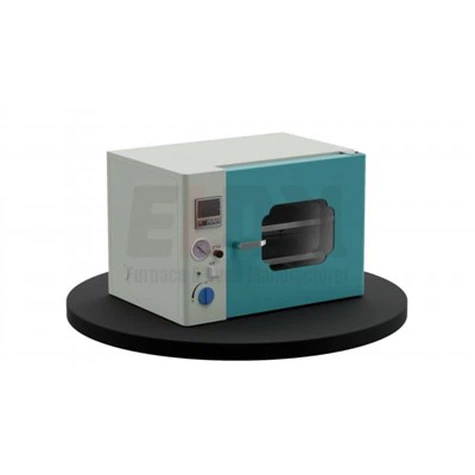
Vacuum furnaces are also widely used in industrial production to realize vacuum quenching and tempering, vacuum annealing, vacuum chemical heat treatment, vacuum coating and other processes. Due to its uniqueness, vacuum furnaces can realize complex processes that other heat treatment equipment cannot handle. There are many categories of vacuum furnaces, such as vacuum brazing furnace, vacuum air quenching furnace, vacuum sintering furnace, vacuum oil quenching furnace, vacuum carburizing furnace, etc. Different vacuum furnace types also have different uses.
Why Choose Us
01/
Rich experience
The company has 26 years of experience in the production of heat treatment equipment, and has strict requirements for the control of raw materials. Each equipment will undergo quality inspection before leaving the factory. Each product provides a one-year warranty and a half-year warranty for heating elements. We provide lifelong service to all customers.
Professional team
The company is located in Hangzhou (Binjiang) High-tech Development Zone, and has a product design and development department and a production department in Heping Kiln, Qiutao North Road. The company focuses on the practical performance of the products, and technical personnel account for more than 60%.
Customized services
Our company provides personalized customization services and customizes products according to your experimental requirements.
After-sales service
Quality assurance: Each device provides a one-year warranty service, and the heating element provides a six-month warranty service. If there is any problem during the warranty period, free repair or replacement service is provided.Technical support: Provide 24/7 multilingual technical support services. Customers can contact the technical team by phone, email or instant messaging tools to solve any problems encountered during use.

Product Categories


Benefits of Vacuum Furnace
Uniform High Temperatures
Vacuum furnaces can maintain uniform temperatures over a wide range, typically from 800 to 3,000 °C (1,500 to 5,400 °F). This uniformity is crucial for processes like brazing, sintering, and heat treatment. Temperature consistency ensures the quality of the final product. The absence of air or other gases in the vacuum environment prevents heat transfer through convection, which can cause temperature variations.
Precise Temperature Control
The temperature within the heating zone of a vacuum furnace can be controlled very precisely. This is facilitated by insulation or thermal barriers that surround the heating zone. Precise control is necessary for achieving the desired metallurgical properties in the heated materials.
Low Contamination
One of the significant advantages of vacuum furnaces is the low contamination of the product by elements such as carbon, oxygen, and other gases. The vacuum environment eliminates these contaminants, which are typically present in air or other atmospheres. This results in cleaner, higher-quality products with minimal impurities.
Quick Quenching
Vacuum furnaces are capable of quickly cooling or quenching the product after heat treatment. This rapid cooling is essential for certain metallurgical processes that require rapid solidification to achieve specific microstructures and properties. The ability to quench quickly is a direct result of the vacuum environment, which facilitates rapid heat extraction.
Types of Vacuum Furnace

Vacuum Heat Treatment Furnace
Definition: Vacuum heat treatment is a comprehensive technology that combines the two majors of vacuum technology and heat treatment. It means that all and part of the heat treatment process is carried out in a vacuum state.The vacuum heat treatment furnace has high heat efficiency, can realize rapid heating and cooling, can realize non-oxidation, de-carburization, non-carburization,can remove the phosphorus chip on the surface of the workpiece, and has the function of degreasing and degassing, so as to achieve the effect of surface bright purification.
Vacuum Sintering Furnance
Definition: Vacuum sintering furnace refers to a furnace for protective sintering of heated objects in a vacuum environment. There are many heating methods, such as resistance heating, induction heating, and microwave heating. Vacuum sintering furnace is a furnace that uses induction heating to protect the heated objects. It can be divided into power frequency, intermediate frequency, high frequency and other types, and can be classified as a sub-category of vacuum sintering furnace.


Vacuum Brazing Furnace
Definition: Vacuum brazing refers to the heating of the workpiece in a vacuum chamber, and is mainly used for welding products that require high quality and easily oxidized materials.And in a vacuum state, the structural parts are heated and insulated to melt the brazing filler metal in an appropriate temperature and time range, and under the action of capillary force, it fully infiltrates, dissolves, diffuses, and welds with the solid metal, so as to achieve a welding purpose. Advanced welding methods. The outstanding advantage of vacuum brazing is that it can connect different metals and realize the simultaneous welding of complex structures. After welding, the welded joint is smooth and compact, with little deformation, and has excellent mechanical properties and corrosion resistance.
Application of Vacuum Furnace
Metallurgy
Vacuum furnaces are essential for many metallurgical applications. The absence of oxygen is advantageous for processes like annealing, brazing, and tempering because it prevents surface oxidation and produces materials with the necessary mechanical qualities.
Aerospace
To ensure the strength and longevity of components like turbine blades while keeping exact dimensional tolerances, the aerospace sector uses vacuum furnaces for heat treatment.
Automobile
Essential automobile components like gears, springs and valves are produced in vacuum furnaces. The surface polish and mechanical properties of these components are improved by the absence of oxygen.
Tool manufacturing
To get the best hardness and wear resistance, high-speed and precise tooling requires a particular heat treatment. The regulated environment required for these procedures is provided by vacuum furnaces.
Electronics
Vacuum furnaces are used in the electronics industry for brazing and sintering tasks to produce uniform, high-quality products and ensure solid connections.
Medical devices
To maintain biocompatibility and structural integrity, implants, medical equipment, and prostheses require precise heat treatment. The regulated environment required for these crucial applications is provided by vacuum furnaces.
Vacuum Furnace Components
Furnace Chamber
The furnace chamber is the core part where the actual heating process takes place.It is typically made of materials that can withstand high temperatures and maintain structural integrity under vacuum conditions.The chamber can be constructed from stainless steel, graphite, or other high-temperature materials, depending on the specific application and temperature requirements.
Heating Elements
Heating elements are crucial for generating heat within the furnace chamber.The type of heating element varies based on the application, with options including resistance wires, silicon carbide rods, molybdenum wires, and graphite elements.These elements are designed to heat up to very high temperatures, often exceeding 1300°C, while maintaining efficiency and longevity.
Temperature Control System
This system is responsible for regulating the temperature within the furnace chamber.It typically includes sensors, controllers, and software that allow for precise control over the heating process.The system can be programmed to follow specific temperature profiles, ensuring that the materials being processed are heated and cooled according to the required specifications.
Vacuum System
The vacuum system is essential for creating and maintaining the vacuum environment within the furnace.It consists of a vacuum pump, vacuum valves, and vacuum gauges.The pump evacuates the air from the chamber, creating a vacuum, while the valves control the flow of gases and the level of vacuum.The gauges monitor the pressure within the chamber to ensure it remains within the desired range.
Sealed Furnace Shell and Cooling System
The furnace shell is the outer structure that houses the furnace chamber and other components.It is sealed to maintain the vacuum and is typically made from carbon steel or stainless steel.To prevent deformation and degradation of the sealing materials due to heat, the shell is equipped with a cooling system, which can be either water-cooled or air-cooled.
Additional Components
Depending on the specific design and application, a vacuum furnace may also include components such as crucibles for melting metals, automatic pouring devices, mechanical arms for loading and unloading materials, and control cabinets with power supply systems and PLCs for overall operation management.
How to Choose Vacuum Furnace
Application requirements
Clarify which specific applications the vacuum furnace will be used for, such as material heat treatment, vacuum brazing, vacuum sintering, vacuum coating, etc. Different applications have different performance requirements for vacuum furnaces.
Temperature range
Determine the required maximum operating temperature and temperature uniformity. Some vacuum furnaces may have a higher temperature limit and better temperature control accuracy.
Vacuum requirements
Different processes require different vacuum levels. Select the appropriate vacuum pump and sealing system according to application requirements to ensure that the required vacuum is achieved.
Furnace size and shape
Choose the appropriate furnace size and shape according to the size and shape of the workpiece to be processed. Make sure that the workpiece can be completely placed in the furnace, and consider the layout and temperature distribution of the heating elements.
Heating method
There are many heating methods for vacuum furnaces, such as resistance heating, induction heating, radiation heating, etc. Select the appropriate heating method according to application requirements and material properties.
Control system
Advanced control systems can achieve functions such as precise temperature control, vacuum monitoring and fault diagnosis. Choosing a vacuum furnace with a reliable control system can improve production efficiency and product quality.
Process of Vacuum Furnace
The process begins by placing the materials or components into the furnace chamber. This can be done manually for smaller furnaces or using a rolling rack or tray for larger ones. The placement is crucial as it affects the uniformity of heating and cooling.
After the chamber is sealed, a vacuum is created by activating pumps that remove air and gases. This step is critical as it ensures that the environment inside the furnace is free from contaminants that could react with the materials being processed. The vacuum level achieved is typically very high, often reaching pressures close to 1 x 10^-6 Torr.
Once the vacuum is established, heating elements, such as molybdenum rods, are activated. These elements heat up resistively, and the temperature can be controlled precisely, often exceeding 1300°C (2372°F). The heating process is computer-controlled, allowing for specific temperature/time profiles to be executed, ensuring repeatability and consistency in the metallurgical properties of the materials.
After the heating process is complete, the cooling cycle is initiated. This can involve backfilling the chamber with an inert gas such as nitrogen or argon to facilitate controlled cooling. The rate of cooling (quenching) can be adjusted based on the material's requirements, ensuring the desired microstructure and properties are achieved.
Exterior Inspection
Routine exterior inspection is the first step in maintenance. First, check the overall condition of the furnace structure and its accessories, including the furnace door, seals, locks, and connecting pipes. Make sure that there is no visible physical damage such as cracks, corrosion, or wear. The seals, in particular, as they are directly related to the vacuum level of the furnace, should be checked regularly for integrity and elasticity to prevent air leakage.
Inspection of the Vacuum System
The inspection of the vacuum system is crucial. The vacuum pump of the vacuum furnace is the core component to maintain the vacuum environment in the furnace. Regularly checking the oil level and quality of the vacuum pump is a basic requirement for maintenance. Low oil level, or poor oil quality may lead to a decline in the performance of the vacuum pump, affecting the vacuum in the furnace.
Check the Temperature Control System
The accuracy of the temperature control system directly affects the heat treatment effect in the furnace. Checking the accuracy of the temperature sensors is necessary. Any deviation of the sensors will lead to unstable temperature control. It is recommended that the temperature sensors be calibrated regularly using a calibration instrument to ensure the accuracy of their output data.
Clean and Replace the Filter
During the operation of the vacuum furnace, airborne dust and impurities gradually accumulate on the filter. Regular cleaning of the filter prevents impurities from damaging the vacuum system and other components. The exact frequency of cleaning depends on how often your vacuum furnace is used and the environmental conditions.
Our Factory
Hangzhou Lantian Instrument Co., Ltd. was established in 1996. In 2001, the company acquired Hangzhou Lantian Laboratory Instrument Factory, which has a technical history of more than 10 years in the production of experimental electric furnaces and constant temperature ovens. Professional research and development and production: laboratory high-temperature resistance furnaces, atmosphere protection experimental furnaces, vacuum experimental furnaces, drying ovens, high-temperature ovens, environmental test chambers, etc. The products are mainly used in colleges and universities, scientific research institutions, industrial and mining enterprises, and are used for testing, firing, ashing, and analysis of various materials under different environments. Our products have entered 95% of domestic colleges and universities, and have achieved 100% coverage in the top 20 colleges and universities in the country.
FAQ
We're professional vacuum furnace manufacturers in China, specialized in providing high quality ODM service. We warmly welcome you to buy reliable vacuum furnace for sale here from our factory. For price consultation, contact us.
High Temperature Stainless Steel Vacuum Box Furnace, vacuum furnace, 1200 Vacuum Vertical Tube Furnace