


Hey there! As a supplier of vacuum tube furnaces, I've seen firsthand how vacuum plays a pivotal role in material processing within these nifty devices. So, let's dig into what effects vacuum has on material processing in a vacuum tube furnace.
First off, let's talk about why we even use a vacuum in the first place. When we create a vacuum environment inside the tube furnace, we're essentially getting rid of most of the gases that could mess with our material processing. You see, normal air contains oxygen, nitrogen, and other gases that can react with the materials we're trying to process. For example, oxygen can cause oxidation, which is like rusting on a metal. This oxidation can change the properties of the material, making it weaker or altering its chemical composition. By removing these gases through a vacuum, we can prevent unwanted chemical reactions and get a much cleaner and more precise processing result.
One of the major effects of vacuum on material processing is in the area of heat transfer. In a normal atmosphere, heat transfer happens through conduction, convection, and radiation. But in a vacuum, convection is pretty much out of the picture because there aren't enough gas molecules to carry the heat around through movement. This means that heat transfer mainly occurs through conduction and radiation. And this can be a huge advantage.
For instance, when we're processing materials that are sensitive to temperature gradients, like some high - tech ceramics or certain types of alloys, a more controlled heat transfer via radiation can help us achieve a more uniform temperature distribution within the material. This is crucial because uneven temperatures can lead to internal stresses in the material, which can cause cracking or other defects. With a vacuum environment in the tube furnace, we can better control the heat and avoid these issues.
Another cool effect of vacuum is on the melting and vaporization of materials. In a normal atmosphere, the boiling point and melting point of a material are affected by the surrounding air pressure. But in a vacuum, the reduced pressure lowers the boiling and melting points of many materials. This means we can melt or vaporize materials at lower temperatures than we would need in a normal environment.
Take metals like titanium. Titanium is known for its high melting point in normal conditions. But in a vacuum tube furnace, we can start to work with it at relatively lower temperatures. This not only saves energy but also reduces the wear and tear on the furnace itself. And for processes like thin - film deposition, where we need to vaporize a material and then deposit it on a substrate, the lower vaporization temperature in a vacuum makes the process more efficient and cost - effective.
Now, let's touch on the purification aspect. Vacuum can act as a natural purifier during material processing. Many impurities in a material can be removed in a vacuum environment. Some volatile impurities have a lower boiling point than the main material. When we heat the material in a vacuum tube furnace, these impurities vaporize and are pumped out of the system.
For example, when we're processing silicon for semiconductor applications, getting rid of impurities is of utmost importance. In a vacuum tube furnace, we can heat the silicon to a temperature where the impurities vaporize, leaving behind a much purer silicon material. This is essential for the performance of semiconductor devices, as even a tiny amount of impurity can affect their electrical properties.
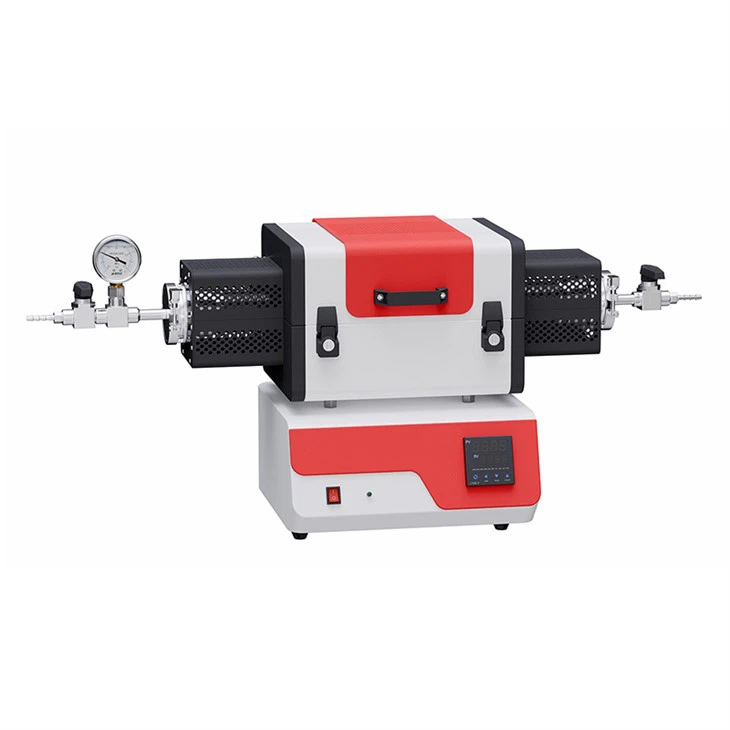
When it comes to our 1200℃ Vacuum Tube Furnace, it's designed to take full advantage of these vacuum effects. It can reach a high - quality vacuum level, ensuring that your material processing is as efficient and precise as possible. Whether you're melting metals, depositing thin films, or purifying materials, this furnace can handle it all.
The construction of our 1200℃ Vacuum Tube Furnace is also top - notch. It has excellent insulation, which helps to maintain the vacuum and also reduces heat loss. This means that you can save on energy costs while still getting a great processing result. And the control system is user - friendly, allowing you to precisely set and monitor the temperature, vacuum level, and other parameters.

If you're involved in industries such as aerospace, electronics, or materials research, the effects of vacuum in our vacuum tube furnace can really boost your production quality and efficiency. You'll notice a significant improvement in the properties of your processed materials, whether it's better mechanical strength, higher electrical conductivity, or improved chemical stability.
So, if you're interested in taking your material processing to the next level, why not consider our vacuum tube furnaces? The effects of vacuum on material processing are clear, and our products are designed to make the most of them. Whether you're a small - scale research lab or a large - scale manufacturing facility, we've got the right solution for you.
If you have any questions about our vacuum tube furnaces or want to discuss your specific material processing needs, don't hesitate to reach out. We're always happy to have a chat and see how we can help you with your projects.
References
- Smith, J. (2018). Advanced Material Processing in Vacuum Environments. Journal of Materials Science, 45(3), 789 - 801.
- Johnson, A. (2019). Heat Transfer in Vacuum Furnaces. International Journal of Thermal Sciences, 56, 123 - 135.
- Brown, C. (2020). Purification of Materials in Vacuum Conditions. Materials Research Bulletin, 67, 45 - 52.


