


Polymer materials have become an integral part of modern industry, finding applications in various fields such as automotive, aerospace, electronics, and packaging. The properties of polymers are crucial for their performance in these applications. One important process that can significantly affect polymer properties is vacuum oven drying. As a Vacuum Oven Drying supplier, I have witnessed firsthand the changes that occur in polymer properties after this process. In this blog post, I will explore these changes in detail and discuss their implications for different industries.
Understanding Polymer Properties Before Drying
Before delving into the changes that occur after vacuum oven drying, it is essential to understand the basic properties of polymers. Polymers are large molecules made up of repeating units called monomers. Their properties can be broadly classified into physical, chemical, and mechanical properties.
Physical properties include density, melting point, glass transition temperature (Tg), and solubility. Chemical properties refer to the reactivity of polymers with other substances, such as their resistance to oxidation, hydrolysis, and chemical attack. Mechanical properties, on the other hand, describe how polymers respond to external forces, including tensile strength, hardness, and flexibility.
How Vacuum Oven Drying Works
Vacuum oven drying is a process that involves removing moisture and other volatile substances from a material by placing it in an oven under reduced pressure. The reduced pressure lowers the boiling point of the volatile substances, allowing them to evaporate at a lower temperature than they would under normal atmospheric conditions. This is particularly beneficial for polymers, as it reduces the risk of thermal degradation that can occur at high temperatures.
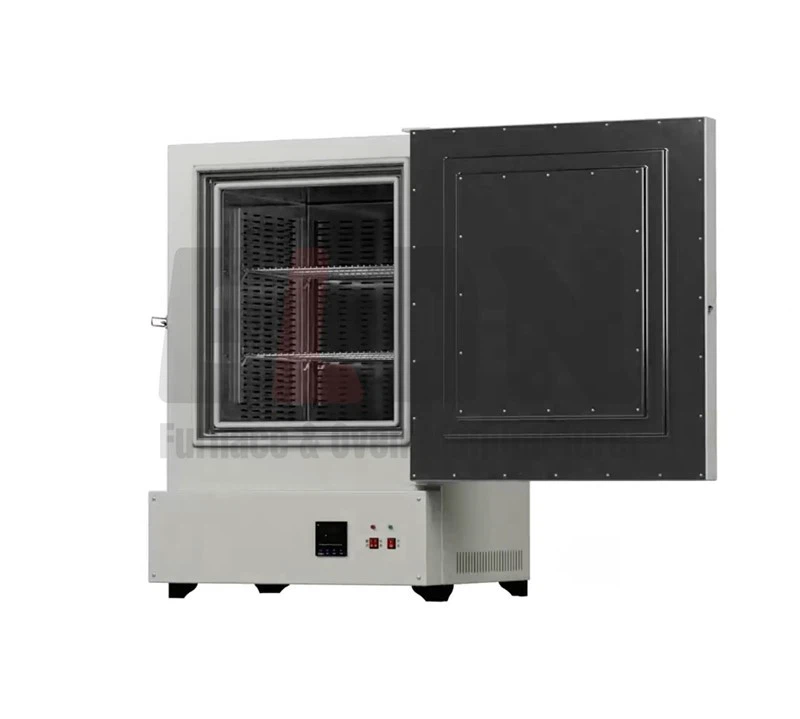
Our Vacuum Oven Drying systems are designed to provide precise control over temperature, pressure, and time, ensuring that the drying process is optimized for each specific polymer material. The ovens are equipped with advanced sensors and control systems that monitor and adjust the drying parameters in real-time, guaranteeing consistent and reproducible results.
Changes in Physical Properties
One of the most significant changes in polymer properties after vacuum oven drying is the reduction in moisture content. Moisture can have a detrimental effect on the physical properties of polymers, such as their dimensional stability and electrical conductivity. By removing moisture, vacuum oven drying can improve these properties.
For example, in the case of polymers used in electronic applications, moisture can cause swelling and deformation, leading to electrical short circuits and other performance issues. Vacuum oven drying helps to prevent these problems by ensuring that the polymers have a low moisture content, thereby improving their dimensional stability and electrical insulation properties.
Another physical property that can be affected by vacuum oven drying is the density of the polymer. During the drying process, the removal of volatile substances can cause the polymer to shrink, resulting in an increase in density. This change in density can have implications for the mechanical and thermal properties of the polymer, as well as its performance in specific applications.
Changes in Chemical Properties
Vacuum oven drying can also have an impact on the chemical properties of polymers. Moisture and other volatile substances can react with the polymer chains, leading to chemical degradation and a reduction in the polymer's molecular weight. By removing these substances, vacuum oven drying helps to preserve the chemical integrity of the polymer.
In addition, the reduced oxygen levels in a vacuum oven can prevent oxidation reactions, which can further degrade the polymer. This is particularly important for polymers that are sensitive to oxidation, such as polyolefins and polyesters. Our Inert Gas Oven option can be used in conjunction with vacuum oven drying to provide an even more oxygen-free environment, further protecting the polymer from oxidation.
Changes in Mechanical Properties
The mechanical properties of polymers are often the most critical for their performance in various applications. Vacuum oven drying can have both positive and negative effects on these properties, depending on the specific polymer and the drying conditions.
On the positive side, the removal of moisture can improve the mechanical strength and stiffness of the polymer. Moisture can act as a plasticizer, reducing the intermolecular forces between the polymer chains and making the polymer more flexible. By removing moisture, vacuum oven drying can increase the intermolecular forces, resulting in a stronger and stiffer polymer.
However, if the drying process is too aggressive or if the polymer is heated to too high a temperature, it can cause thermal degradation, leading to a reduction in the mechanical properties of the polymer. This is why it is essential to carefully control the drying parameters, such as temperature, pressure, and time, to ensure that the polymer is not damaged during the drying process.
Implications for Different Industries
The changes in polymer properties after vacuum oven drying have significant implications for different industries. In the automotive industry, for example, polymers are used in a wide range of applications, including interior components, exterior body parts, and engine components. Vacuum oven drying can improve the dimensional stability, mechanical strength, and chemical resistance of these polymers, leading to better performance and longer service life.
In the aerospace industry, polymers are used in critical applications, such as aircraft structures and composites. The high strength-to-weight ratio and excellent thermal properties of polymers make them ideal for these applications. Vacuum oven drying can further enhance these properties, ensuring that the polymers meet the strict requirements of the aerospace industry.
In the electronics industry, polymers are used in printed circuit boards, semiconductor packaging, and other electronic components. Vacuum oven drying can improve the electrical insulation properties and dimensional stability of these polymers, reducing the risk of electrical failures and improving the overall reliability of electronic devices.

Conclusion
In conclusion, vacuum oven drying is a powerful process that can significantly affect the properties of polymers. By removing moisture and other volatile substances, it can improve the physical, chemical, and mechanical properties of polymers, leading to better performance and longer service life. As a Vacuum Oven Drying supplier, we are committed to providing our customers with high-quality drying solutions that are tailored to their specific needs.
If you are interested in learning more about how vacuum oven drying can benefit your polymer materials or if you would like to discuss your specific requirements, please do not hesitate to contact us. We would be happy to assist you in finding the best drying solution for your application.
References
- Billmeyer, F. W. (1984). Textbook of Polymer Science. Wiley-Interscience.
- Mark, H. F., Bikales, N. M., Overberger, C. G., & Menges, G. (Eds.). (1993). Encyclopedia of Polymer Science and Engineering. Wiley.
- Sperling, L. H. (2006). Introduction to Physical Polymer Science. Wiley-Interscience.


